WELCOME!

Welcome to Through the Slant a blog offering perspective of the world from the the eyes of an aspiring pseudo sociologist who often believes that he is either too Asian or not Asian enough. If you enjoy my blog, become a follower don't be shy.

Monday, May 4, 2009

ObserAsian #3 Asian Themed Tattoos

As society has become increasingly progressive, tattoos have made their way towards mainstream acceptance. Tattoos throughout the years have been become increasingly popular and the overall increased prominence of tattoos has also led to the increase in the number of Asian themed tattoos taking up body real estate. I am going to offer a breakdown of these said Asian themed tattoos.

There are two main subgroups of Asian tattoos: the Asian character tattoo and the dragon/ phoenix / tiger / koi tattoo.

The most prominent Asian themed tattoo is the Asian character tattoo. Who cares if you cannot read it? Just the fact that you know that everybody you come into contact with will ask you what your tattoo stands for is cool enough. For better or worse, Asian character tattoos are instant conversation starters. I have one question for anybody who is contemplating getting an Asian character tattoo. Do you really want to give godlike power to your tattoo artist and entrust their knowledge of the respective Asian language your character/ characters is from; especially when most tattoo artists look like this guy:
I know they tell you to never judge a book by its cover. But I'll be damned, I'm judging.

I do not have an Asian character tattoo, but can imagine how the train of thought of one who has an Asian character tattoo might resemble in male and female version.

Male Version:
Hmm... I really want a tattoo.
I want my tattoo to be bad ass.
I've been working out for a long time.
My tattoo needs to emphasize how strong I've become.
Ehh... maybe I'll get a tribal armband.
Never mind. Tribal armband = douche.
Well I still want to emphasize how strong I am, I'm so powerful.
Maybe, I'll get power tattooed on my arm.
That's stupid, I'll get the Asian character for power on my arm instead.
I really hope this means power.
Whatever, even if it doesn't, I'll tell everybody it does.

Female Version:

Hmm... I really want a tattoo.
I want my tattoo to be sexy.
I've been doing the elliptical for a long time.
My tattoo needs to emphasize femininity and sexiness.
It also needs to mean something to me.
Love means something to me.
It can't be trashy though.
Maybe I'll get a lower back tattoo.
Wait... people call those tramp stamps. I can't get one of those.
But love really means something to me.
I can't get love tattooed on my lower back.
I'll just get the Asian character for love instead, people will think I'm deep.
Do you think they'll still call it a tramp stamp?
Whatever... I've been running on the elliptical for a long time, I deserve this.

The other large subset of Asian themed tattoos are made up of tiger, phoenix, dragon or koi tattoos. These tattoos in their most prominent application typically cover a large portion of the body, are extremely elaborate, and are great at compensating for a lack of toughness. Anybody who is willing to subject themselves to four tattoo sessions for a tattoo that covers 70% of any given body part must be tough. It does not matter that this is 70% of a body that usually weighs between 130-170 pounds. The only notable exceptions to this rule are members of the Triad or Manny Pacquiao. They are an intimidating bunch, and are free to tattoo whatever they want wherever they want without repercussion or having their manliness put into question.

And if you're contemplating an Asian tattoo I present you with this infamous tattoo. He thought it was a phonetic translation of his name, Mitchell. It actually means "Rice Covered Balls." Something tells me that is not what he intended for.


Fail. In fact, epic fail.

Read more...

Monday, April 27, 2009

Stuff We Rike #5 Each Other

There is an unattributed quote that has withstood the test of time, "They're both Asian, they probably know each other." As much as I want to discredit this statement, I cannot. Kevin Bacon may believe that there are only six degrees of separation between any two people. With Asians, you can probably halve that. The reason for this is because Asians like to stick together. A lot.

Humans really enjoy spotting hard to find objects and people whether it be buried treasure, Waldo or the backward diagonal words in the difficult word searches. Forget about Abdominal Snowman, Yeti, or even Bigfoot sightings. Forget about identifying Area 51, unidentified flying objects or crop circles. Nothing is harder to spot than the lone Asian. Asians are big fans of the pack mentality, the more the merrier. In short, Asians really like each other and will stick together unless there are unforeseen circumstances; you know like when an Asian can't find another Asian to be around.

There is a common stereotype that Asians are quiet and reserved. This is completely untrue. Studies have shown that only Asians in limbo, or Asians who are separated from the pack, are quiet and reserved. Asians are not unlike fish, they operate in much of the school mentality. We shall now refer to lone Asians as Dorys from Finding Nemo fame. . You put enough Dorys together however, and great things can happen just like at the end of Finding Nemo when they topple an entire fishing boat by collectively swimming against the grain. A Dory by themselves is lost, confused, and tries their best to adhere to their surroundings and is highly unlikely to go against the grain. The more fish in a school the more capable they are of thwarting other fish higher up on the food chain from eating them just like the the more Asians in a group the more social and outgoing they become.

Asian appreciation of other Asians has led to urban concentrations of Asians in Chinatowns, Koreatowns, and Little Tokyos around the country. Other common locations for Asian clusters include coffee shops, bubble tea shops, any shop that sells bubble tea, and library study tables. It has also led to the creation of ethnic fraternity and sororities, and college cultural awareness groups with the intention of expanding Asian interests. You may ask what these Asian interests are? The interest in being around even more Asian people.

Don't get me wrong. I think that there is absolutely nothing wrong with people who want to spend time with people who share similar back stories and backgrounds. People are naturally drawn to people who share cultural similarities with themselves. For example at the University of Michigan, my Alma Mater, there were 40 active groups with "Asian" interests listed in their descriptions for the past academic year. I completely understand having a Chinese student group or Vietnamese student group. We like each other, and we like each other more the more we have in common. But at what point does it become too much? I would argue that when there is a student group for Chinese American Christians Who Like to Bowl Student Association we have gone too far. That group does not exist yet, but slippery slopes my friends, slippery slopes.

As with anything, there are of course exceptions to this finding. You may say, "Hey! Wait a second, I am my own person. I have tons of non-Asian friends!" That may be true. But deep down, you don't really like being the token Asian in any group. You like being around Asians. I know I do. You just can't help it, deep down we just really like each other.

Read more...

Wednesday, April 22, 2009

Stuff We Rike #4 Paleness


With the popularity of Stephenie Meyer's Twilight series, vampires have taken center stage and have reached a level of mainstream popularity that has been absent ever since nutritionists told us that we could no longer eat chocolate flavored cereal for breakfast, sorry Count Chocula. The recent resurgence of vampires has forced me to ponder a very serious question: "Are Asian women secretly vampires?" Why else would they be so obsessed with preserving the opacity of their skin? Why else would they try and avoid the sun like the plague? This leads to the fourth thing Asians really like, being pale.

The western world once took pride in being plump because that meant that they had the luxury of eating whenever they wanted to. The modern western beauty standard for women is having the luxury to not eat whenever they want to and being able to fit into skinny jeans. Asians traditionally took pride in being pale because that meant that they did not have to spend any time working in the fields under the intense barrage of the sun's rays. A few thousand years later and Asians have maintained their aversion to the sun and pale skin remains their beauty standard. Yes, us Asians are a progressive bunch.

Now how much do Asians value their paleness? So much so that they have even gone to great lengths to discredit all the work that cartographers have ever done. There are seven continents and on five of them their people can be classified by their continent. For example, if you are French, you still consider yourself European. Asians however, are so disenchanted by the dark complexion of those from Laos, Cambodia, Burma, and Vietnam that they call them Southeastern Asians. As for over a billion of those Indians? Let's just call them Indians; they are way too dark to even have the Asian suffix.

Asians place such a premium on being pale that they go to great lengths to shield themselves from the sun. SPF 60 is only one of the many precautionary measures taken by Asian women in their multi pronged war against UV rays. Other precautionary sun battling tools include sunglasses and long sleeved garments. Some might think that I am exaggerating the fear that Asian women have of the sun but to you I show you:

Exhibit A: The umbrella on a sunny day phenomenon. Let's examine this picture a little more closely. It is clearly a sunny day. There is no rain. There are four Asian women. There are three umbrellas. The only woman without an umbrella is wearing long sleeved clothing from head to toe. Score: Asian Women 4. Sun 0.

Exhibit B: The full length glove. These gloves act as sun guards for the ever sensitive arm skin of Asian women. They are usually used in a driving setting and offer absolutely no functional benefits over long sleeves except that since they cover the hand and fingers full length gloves protect 22% more surface area from the sun.
Exhibit C: The WTF Visor. I am going to try to justify the latest trend in anti-sun wear. These visors could possibly be a tribute to the Asian love of metallurgy and are the modern reincarnation of the traditional welders mask. On second thought, probably not. Maybe ever since George Lucas debuted his Star Wars movies, Darth Vader has become a fashion icon in Asian society. Enter the Asian visor which provide the ability to block out any potentially harmful sun rays from reaching the face. The visors now even come in pastel colors to celebrate the arrival of spring. I completely made that up, I cannot really justify these visors, WTF.

After examining these three exhibits, you cannot come to any other conclusion other than Asians and especially Asian women really like being pale and really dislike the sun. If Asians didn't consume garlic like water, they would indeed be vampires. But since they can't be vampires, they might as well be umbrella wielding, long glove wearing, Darth Vader impersonators. Vitamin D be damned, we don't want no sun.

Read more...

Monday, April 20, 2009

Stuff We Rike #3 Complexity


"Life is really simple, but we insist on making it complicated."
-Confucius

The list of figures whose wisdom have permeated to the present is a short list and Confucius is one of the few figures who have withstood the test of time and made the "their axioms will have credibility until the end of time," shortlist. You may be wondering how this quote pertains to what Asians like but let me assure you it does.

The collective "we" that Confucius is referring to are Asians. Asians have shown the collective ability to take any simple situation and make it about 376.41% more complex than it should be. Now why 376% more complex? Because 376% would just be too simple a figure. Do not get me wrong however, this does not mean that Asians cannot operate in complex situations; they actually thrive in such situations. In fact Asians take immense pride in the complexity that they surround their everyday lives with. In fact if Confucius says so, it must be true. Let's examine this phenomenon a little more in depth.

LANGUAGE

One of the easiest places to see how Asians choose complexity over simplicity is in how they communicate. From the earliest days of writing where symbols and pictograms were used to convey information to today's modern forms of communication, language and particularly the written language has gone through an immense amount of simplification. Most written languages throughout the world share similar beginnings with pictorial representations and a few Rosetta Stones and modifications later arrive at an alphabet system to make things simpler.

Asians, and more specifically the Chinese, however, have chosen to not only choose not to simplify their written language with an alphabet but have stuck with using one character to represent one idea. This is the Chinese character for "I": 我. Seriously. And you wonder why Chinese is so hard to learn? Because it is complex. Asians love that their languages are insanley hard to understand and learn and take pride in the fact that their languages are hard to decipher; we like to be a complicated bunch.

Entertainment

People like to do enjoyable things and engage in activities to entertain themselves themselves for the sake of fun. One of the most time tested of these activities is checkers; easy to learn, difficult to master. Traditional checkers takes place on an 8x8 board that has alternating squares where pieces can only move in two directions. We all know the game. We have all played it at some point in our lives.

Now what happens when you cross checkers with Asians? You get Chinese checkers. Let's take the game of checkers, find out how we can increase its complexity and then we can call it an Asian parlor game. The thought process going into creating Chinese checkers mus have gone something like this: A square board? Too simple. Oh let's make the board a hexagram instead. Two sets of pieces? Too simple. Oh let's actually make six sets of pieces. 64 squares? Again too simple. Let's make 121 indentations instead. I guess if If we allow the pieces to still jump we can still call it checkers. Whallah! I present you Chinese Checkers!

EATING

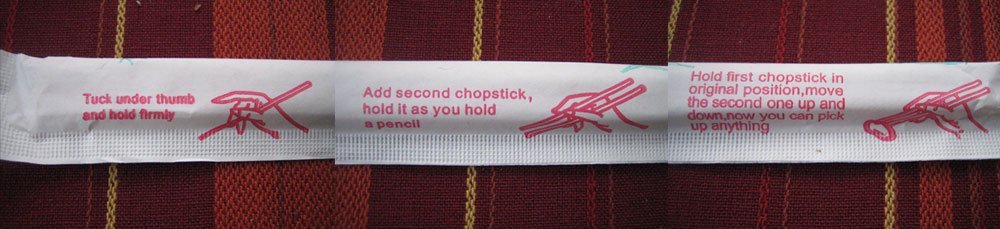
Food and the need of it is one of the few human necessities. How Asians choose to eat their food is another way that Asians choose to over complicate their lives. I am going to reiterate once againthat everybody needs to eat. Food is a must. You would think that you would like to consume food in the simplest manner possible. Asians disagree. In fact most Asians choose to eat their food by using two rounded sticks to pick things up. Some may be saying that they know how to use chopsticks and that they are highly efficient. I answer you this. Do you take pride in being able to use any other eating utensil? Have you ever heard anybody gleefully state, "Yes! I can use a spoon!" Probably not. And lastly, what other eating utensil comes prepackaged with instructions.


Math

Asians like math. They prefer complicated math. This is a topic for another day.


Read more...

Friday, April 17, 2009

ObserAsian #2 Asian Basketball Courts


When the topic of how race affects sports, it is usually discussed within "black" and "white" parameters, as are most race related topics. When discussing the relationship between race and athletics there are certain parameters that have be adhered to:

1) You can never make cross racial comparisons. Comparisons are indeed only skin deep. For example Dirk Nowitzki can in no context ever be compared as a player to any non white player.

Statement A: Dirk Nowitzki plays basketball like Rashard Lewis is a fallacy.
Statement B: Dirk Nowitzki plays basketball like that lanky white European guy with 9 vowels in his last name is roughly about 150% more accurate than statement A.

2) Although politically incorrect, sports can be classified racially. This is done by one of two principles:

Principle 1: A sport's racial identity is determined by the majority of its participants. Examples: Lacrosse is a white sport. Ping pong is an Asian sport.

Principle 2: A sport's racial identity can be determined by the racial makeup of its most elite competitors because they dominate so much coverage. Examples: Competitive eating is an Asian sport because Kobayashi is the face of the sport.

Notable Exception: Tiger woods owns golf. He is half black and half Asian, but golf is a white sport. Any sport where people dress like this when they play has to be classified as a white sport. Sorry Tiger, you gave it a valiant effort.


When addressing sports that enjoy vast popularity and participation such as basketball however, it becomes much harder to understand the racial dynamics of the sport. Basketball at the highest level is played predominately by blacks. That does not mean that there aren't plenty of racially diverse players participating in pickup basketball games around the country. It is this diversity that has persuaded me to go further into depth on a subtler phenomenon, the Asian basketball court.

In any gym where there are multiple basketball courts set up whether it be at the local YMCA, luxury gym or college recreation building, there is a hierarchy of courts. The way the courts work usually is teams play to a predetermined score with an agreed upon scoring system and the winning team stays on the court while the losers have to make way for the challenge team. There is usually a "top court" that is reserved for players who have some high school playing experience, have general athletic ability or just happen to be tall. There are then subsequent courts that progressively drop in basketball ability. Then usually tucked along a wall or a curtain that makes playing basketball more difficult, is the aforementioned, "Asian Court"

Here are some defining characteristics of the "Asian Court":

1) There are a lot of Asian people playing. On the Asian court, play is not confined to playing 5 on 5 as many times there are upwards of 14 people playing at once.

2) Nearly everybody is under six feet tall and if there is somebody taller than six feet he is probably very bad at basketball.

3) The players waiting to get "next" are all Asian.

4) If a group of non Asian players want to get next on the court they are greeted with responses such as "We only want to play with our friends," or "This court is reserved for two hours for our (insert Asian cultural club name)," or the infamous awkward nod and reluctance to acknowledge that they speak English.

5) Players cheer whenever a basket is scored with emphatic high fives, cries of "aya!" or smiles whether that basket is scored by a teammate or the other team.

6) You will never see a dunk.

7) Oh yeah, English is rarely spoken.

Now these are not necessarily rules for the Asian court but rather tenants that are predominantly true, except maybe the dunk thing. I want to reiterate that the courts from the "top court" to the "Asian court" are determined by skill not race. This means that skilled players can migrate to any court they choose as long as they win and maintain control of a given court.
It just happens that the "Asian court" is universal among college campuses that this had to be discussed.

In fact if you are good at basketball and happen to be Asian, there are only two things that can happen if you're playing on the non Asian court. People instinctively start calling you "Yao or Yao Ming," if you do something well and if you display an ability to dribble in any capacity you may also be called "Soy Sauce." Refer to rule number one of race and sports; since we are Asian we can only be compared to other Asian basketball players. The other thing that can happen is when there are more than one Asian player and they happen to be on separate teams. When a non Asian player throws the ball to the wrong Asian they can claim that we all look the same, everybody proceeds to laugh, then play commences again despite the fact that one Asian is 5'6 stocky, wearing a black t-shirt with spikey hair and the other Asian happens to be 6'3 skinny wearing a Kobe jersey with a shaved head.

Many collegiate basketball coaches when basketball was still in the process of being integrated have said, and I am paraphrasing, that you can start 3 blacks, 4 if you're daring, and you can play 5 if you're losing.

I would like to add in pick up basketball terms, "You can play with 3 Asians on your team to start, 4 or 5 and you're on your way to being the Asian court."

I play basketball. Sometimes I play on the Asian court.


Read more...