WELCOME!

Welcome to Through the Slant a blog offering perspective of the world from the the eyes of an aspiring pseudo sociologist who often believes that he is either too Asian or not Asian enough. If you enjoy my blog, become a follower don't be shy.

Tuesday, December 1, 2009

Stuff We Rike #12 Having Immaculate Handrwiting


As I have previously mentioned, Asians really like repeating things; especially really tedious things that require meticulous amounts of concentration. One of these such things is handwriting. Asians love handwriting and especially immaculate handwriting that can be described as cute, neat, organized, or all of the above. I would venture to guess that handwriting can be described as Asian.

Exhibit A: White dude or definitely not Asian handwriting
Exhibit B: Asian girl or definitely Asian handwriting
Never mind that exhibit A features the use of the Greek alphabet or that exhibit B features the use of a variety of boxes and circles. You see how straight exhibit B is? You see how neat it looks? You see how even it looks? Truly the work of an Asian.

You know how I know that Asians love handwriting? They invented paper. While everybody else in the world was wiling and happy with writing on stone slabs, cave walls, and papyrus, Asians decided that they needed something to practice their handwriting on, hence paper. You know those handwriting worksheets with the dotted lines that were the bane of elementary school where we struggled to trace the dotted letters? It was probably an Asian person's idea. I'm actually not sure, but it might as well be. While we're at it, Asians probably perpetuated the concept of coloring inside the lines. I challenge you to name me one Asian abstract artist. It's an oxymoron.
To be fair, being good at something only means you're good at it and does not necessarily meant that you like to do it. So besides the fact that Asians are good at handwriting, how do we know that Asians really do indeed love handwriting? Let's look at the facts. While many cultures at one time or another placed a high premium on calligraphy, only Asians give handwriting reverential status. They even break down handwriting mastery into 6 categories: paper, paperweight, desk pad, ink and ink stick, ink stone, and seal and seal paste. Without getting too far in depth, the fact that I have no idea what four of those things are just goes to show you that Asians take this whole writing thing seriously. While most folks are trying to decide between, Times New Roman, Arial and Verdana, Asians are deciding between ink stick and seal paste. Yeah, Asians like handwriting.

Asians like handwriting so much that they have created an entire industry based around it. I challenged you earlier to name an Asian abstract artist to no avail. That was a tough challenge because there is a limited pool of acclaimed abstract artist to begin with. I further challenge you to find the rare Asian with a non mechanical pencil. In fact the Asian writer surely will not be limited to only one mechanical pencil. They probably have at least a few back up pencils, extra lead refills, a variety of multi colored gel pens, a mini ruler, mini scissors, and one of those white plastic architect erasers because surely the small eraser attached at the back of the pencil would not suffice. If you're going to have to write Asian, you have to be able to fix
All of these handwriting tools would also surely be housed by a specially designated pencil case that had a high probability of being adorned with a cutesy fictional animal with abnormally sized eyes and a zipper. These pencil cases are the Swiss army knives of the handwriting world. Just as a chef would never think of preparing food without their knives, Asians would never think of writing without their pencil case. So as the holidays approach and the masses are flocking towards the Hallmarks and American Greetings of the worlds, Asians are hoarding their gel pens and special writing utensils readying themselves to write that perfect card, with Asian handwriting of course.


If that isn't enough proof for you that Asians love handwriting, what about the fact that Asian languages are also really complicated and make it even to write immaculately much less legibly. This is an example of simplified Chinese. Now write that with an ink stick.
Random question. What happens if you get a prescription from an Asian doctor? Some things in this world are just meant to perplex; this may be one of them.

Read more...

Wednesday, November 18, 2009

Stuff We Rike #11 Rooting For Asians in Fields Asians Traditionally Suck At


Welcome back! I would have liked to post at a more frequent and rapid pace but unfortunately I have been operating on the wrong end of colored people time, more commonly known as "CPT." You may have seen Asians show up ridiculously early, especially the group of Asian international students who show up 20 minutes early to lecture and occupy the first two rows of the auditorium, but let me assure you that the CPT phenomenon is native to American born Asians. So yes, I operate on CPT, and for that I apologize. Woody Allen once said that "Ninety percent of life is just showing up," and since I have not been showing up, I have been sucking at life. Anyways, without further ado and the longest "Stuff We Rike" yet... Asians really like to to root for Asians in fields Asians traditionally suck at.


You may be wondering why Asians don't just like to root for other Asians and in fact normally secretly hold grudges against each other. Let me explain. Asians have a lot of shared history; at some point China took over our homeland, China tried to take over our homeland, or our homeland was actually just China. Second generation Asians also have a lot of shared history. Our parents all made us take piano, try violin if we sucked at piano, try cello if we sucked at both piano and violin, and for 99.9999% of us our parents all looked at us in shame when they realized we would not make it into Juilliard as a pianist, violinist or cellist. Our parents all enrolled us into preparatory classes in the sciences and math at age 6 or at the first sign that we might not eke out an "A" on our report cards. So if you were put in our shoes, would you root for the next Yo-Yo Ma? Hell No. The next math team prodigy? Seen that, been there, not one bit exciting to root for. Now the next Asian American Idol contestant? Now that's exciting.

As highlighted by the annual NCAA March Madness basketball tournament, everybody likes to root for the underdog. There is just something special about rooting for David that most casual fans cannot avoid. Well there is also something special about rooting for Yao, or Kim, or Chang, as long as that surname is of Asian origin for Asians. I spent the middle of my teen years rooting for Dat Nguyen the diminutive linebacker for the Dallas Cowboys even though I watched him a total of zero times on television because to me, "he has to be Asian, he's playing in the NFL, that's AWESOME!" Last year when I was scouring the Internet researching potential draft picks, I stumbled upon Pat Chung from Oregon. Needless to say, I thought I would soon have a new favorite player in the NFL. Then I looked up his picture:

Damn. I will have to wait until another day.

Asians also want to root for Jet Li and Jackie Chan as our most famous actors, but they are basically ninjas. Lots of Asians are ninjas so therefore they are not that exciting. Now if some Asian actor actually got to kiss the girl or stop the bomb threat threatening the livelihood of the citizens of Los Angeles, that would truly be something to get exited about. I can't even imagine
Jack Bauer being Asian and even if he was, he'd probably not use guns, know how to do karate, and would depend on outwitting his enemies with his brain rather than out kick ass them. At least we have Harold, the Asian stoner, he gives us hope so we root for him.


There are over one billion of us just pining to root for stuff, especially other Asians in fields that we suck at so for all you Asians out there, step your game up and we'll be cheering you on.


Read more...

Tuesday, September 15, 2009

Stuff We Rike #10 Fat Idols


Before I delve into my next post, let me apologize to all my readers for basically taking an extended too lazy to type and think phase. I am now back and committed to updating this blog and spreading my meaningless observations to the clamoring masses =].

Okay, now back onto subject. Asians as a general whole are a pretty skinny bunch. We are known for being short, nimble and evasive. Asians you could say are generally considered to possess many of the physical attributes that would best allow for hand to hand combat and occasionally feet to feet combat as well Although one would like to say that this is a gross misrepresentation of Asians and merely a poor stereotype, I would argue that there is indeed much merit to this perception as Asians are pretty darn skinny. In fact, Asians are so skinny, they idolize fat things.

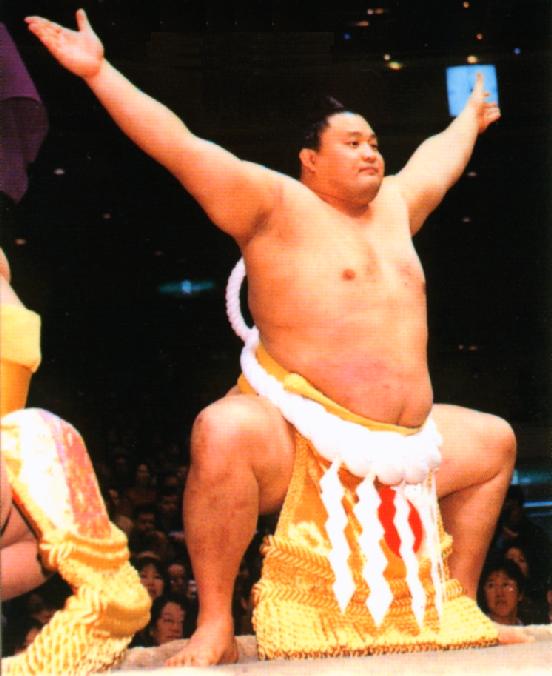
They say the grass is always greener on the other side. Well for Asians the grass on the other side would be obesity. While Americans are constantly wrestling their conscience with french fries, with french fries usually winning the battle, Asians are busy staying skinny and living longer than ever. This is clearly evidenced by the Asian love of sumo wrestling a sport where each additional excess pound equates to greater admiration. Some would argue that Americans value their football linemen, but let's be honest, Americans root for the skill players. In Asia they just root for the fat people. Asians admire the fact that these massive gladiators are able to consume such large quantities of food and get so large. Kobayashi became a star in America because Americans were befuddled by his ability to ingest that much food in such a short period of time and still manage a svelt physique while in Asia people were less than impressed. In fact Asians thought it was such a waste that Kobayashi could eat so much food and not get any bigger. In fact, Asians are so amazed that a fellow Asian can get so large that they have even created a term, "yokozuna," to admonish upon their prized massive heroes.

Asians have taken their admiration of the over sized beyond the athletic arena and have also extended this admiration to their higher beings. Through time many Asians have devoted their time towards practicing Buddhism. Asians particularly have a special place in their hearts for the "fat Buddha," because let's be real, he just looks so friendly with his round belly and ear to ear grin. If you were to tour ten Asian households, eight out of ten of those households would have a Buddha statue on display and eight out of eight of those statues would probably be of the fat variety. What makes "fat Buddha" so attractive? Perhaps it's the huggability factor of the "fat Buddha" that attracts Asians. Or perhaps it's just the fact that Asians really like to idolize fat things and in this case religious figures.

You cannot place the value on a child. Children, are appropriately so, the most prized possession of any adult. For Asians, fat children and specifically fat babies are the most prized possession possible. Every Asian mother wants a fat baby with round cheeks, short extremities and an oversized head. It is a sign of great fortune and would make any grandmother blush over her luck in having a fat grandchild. I am proud to say that I was a 10 pound baby. Sorry mom. I hope the good fortune that I brought into her life offset the delivery troubles she went through. In short, babies are great but fat babies are better.

Now one may wonder how the Asian obsession over fat things developed. I have no idea but I can venture a guess. Perhaps it's the fact that Asian children grow up playing with fat toys. While American boys grow up playing with X-men and GI-Joe figurines and American girls grow up playing with Barbie dolls, Asian boys grow up playing with Kerrope, a fat green frog, and Asian girls grow up playing with Hello Kitty who despite her cute bow tie, is quite chubby. So while American children grow up idolizing body types that are unreasonable, Asian children grow up liking fat things. See Americans grow up idolizing turtles that know martial arts and eat pizza. Asians grow up idolizing fat frogs. There in lies the difference and why we like fat things.


Read more...

Tuesday, August 4, 2009

ObserAsian #6 Being Part Asian is Trendy

Ying and Yang. Peace and Harmony. East meets West. U Plus Sign Me Equal Sign Equals Us.


You know since it is the 21st century and all, things have come a long way. From the days of mass paranoia caused by the mass influx of Asian immigrants to work on the transcontinental railroad lines, and the days of the "yellow peril", we have surely made a lot of progress. Instead of threatening the wages and standards of living of whites, Asians have done such a great job in not meddling with whites that they have since become, "model minorities." In fact some might even say that we have, "made it," in the eyes of our American brethren and maybe even to the point where being Asian is, dare I say, trendy.

Much like trick yo-yo's, Pokemon, tamagotchis, beanie babies, pogs, and the Nintendo Wii, being exotic or having a "hint of the orient," has become quite the fad. Actually, now that I think about it, those fads that I previously mentioned all have Asian ties. See, Asian is cool. Being associated with Asia is the hot thing of the moment. I mean what's more desirable than a mixed race baby? I would argue a mixed race baby that's part Asian; they're so cute.

In fact being slightly associated with Asia has become quite mainstream. Before I get further in depth on this topic, let me reemphasize the slightly associated with Asia part. I mean to be fully Asian is to be communist, American job stealing, copyright infringing, and human rights violating. So clearly being fully Asian is not quite up to snuff with being part Asian. Jackie Chan and Jet Li never get to kiss the girl. Tiger Woods is married to her. Being part Asian has its perks.

For example nothing has exploded onto the scene of posh and hipster dining like Asian fusion restaurants. With the opening of each abstractly named fusion restaurant that has no absolutely no bearing with the food the establishment actually serves, fusion restaurants are taking America by storm. With their backless seats, modern furniture, interesting plating and small portion sizes, Asian fusion restaurants are redefining the way Americans are both viewing and consuming their spring rolls. It's hard to describe what fusion restaurant really means except that it's more expensive and probably has something to do with east meeting west.


The hipness of having Asian ties is not exclusive to the high end however, as fast food chains have recently latched on to the increasing popularity of being associated with Asian stuff. In fact nearly every fast food establishment has their version of an Asian salad or an Asian sauce. All it takes are some crispy noodles, some canned mandarin orange slices and some sesame dressing and you instantly have a fast food best seller. The marketing geniuses of fast food America have realized that you can take something you already sell, glob on some soy sauce or ginger based sauce and you can charge a thirty cent premium and rake in the big bucks.

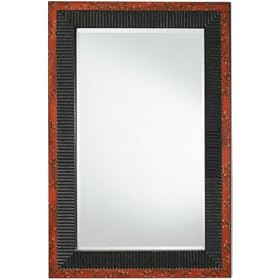
The Asian trendiness factor need not be limited to culinary interests but has expanded into all aspects of Americana and has infiltrated the American household. We are not discussing Asian architectural mainstays like Buddha statues, pagodas or outdoor Japanese water gardens. Asian fusion furniture is a hybrid of modern furniture with an eastern flare. In short, Asian fusion furniture is modern furniture kicked up with another notch of vagueness. Confusingly, Asian fusion furniture is fast becoming one of trendiest growth sectors of the interior decorating world. I mean what makes a leather sofa Asian? Is it shorter? Is it shaded yellow? I kid. Regardless, it's another example of the increasing uptick in Asian culture creeping into mainstream society. I mean what's better than a regular mirror? Easy! An Asian fusion inspired mirror! I have no idea what makes this mirror an Asian fusion mirror, but I googled it and you know google is pretty good at the whole search thing.

With the increasing acceptance of Asian culture into mainstream American culture, you may be wondering what my take on all of this is. Well you know they say America is a melting pot. Well Asians are getting mixed into this proverbial melting pot as well and that's probably a good thing. I mean even if this increase in Asian culture is misguided, inappropriate, or potentially slightly politically incorrect, at least we're trying. I mean who doesn't like to try and be more like people who are different than us. That's why there's Halloween and these dudes. See we're guilty of it too.


Read more...

Friday, July 24, 2009

ObserAsian #5 Eye Envy


For better or worse, she wants bigger eyes. Most Asians inherently do for no good reason whatsoever and have quite the case of eye envy.

What do Pikachu, Sailor Moon, Hello Kitty and the cast of characters from Final Fantasy all have in common with one another? Well aside from being the subject of young Asian fantasies, they all share one connecting bond; they all have abnormally over sized eyes. Much like height challenged males who drive Ford F-350 pickup trucks or the ego challenged driving Porsche, Asians are constantly made aware of their ocular shortcomings and choose to overcompensate by endowing their creative forays with disproportionately large eyes.

Asians are obsessed with many things but among the most touchy subject for Asians are their eyes. Asides from you know, the color of their skin, the one physical attribute that most easily identifies Asians are their distinct eyes. Through the vigors of childhood nursery rhyme clapping games, even young children are crudely adept at determining who is either Chinese, Japanese or an Indian Chief. Since there is no Asian equivalent to "sticks and stones my break your bones, but words may never hurt you," Asians have taken these eye taunts to heart and have grown increasingly self conscious of their eyes.

Many Asians lack a "double fold" in their eyelids which creates the slant like appearance of Asian eyes that have become commonplace in the caricatures of Asians and the mockery of Asians by Disney youth celebrities (That would be you Miley Cyrus). It is this lack of a double fold that creates the illusion that Asians have smaller eyes than others and more importantly gives my blog its title. Asians, and especially Asian women, have allowed this eye obsession to create mass insecurities and have led many Asians to take upon many options to try and increase the size of their eyes or accentuate what eye shape they already have.

Much like the western beauty standard that Asians want to adapt, Asians have also adopted the western way of achieving this standard; surgery! Asian women often travel outside the country to receive fat injections in their eyelids to create the ever elusive double eye fold. The other oft used method for eye accentuation is the much less drastic but equally excessive technique of creating the much coveted "smoky Asian eye look." The theory behind the smoky eye is very similar to the vertical or horizontal stripe theory which tells fat people to wear vertical stripes to bring out their height. The smoky eye theory basically means to surround your eye with as much dark make up as possible so that it looks like your eye whites are taking up a lot more space than they actually are. As a side benefit, the smoky eye makeup also allows Asian women to look extra exotic for good measure.

You may think that the Asian envy of the western standard of eye beauty may be a bit overdone, and in that regard, you are indeed correct. What compounds the perplexity of this entire scenario is how Asians choose to tackle this self esteem issue. Even though Asians make up a third of the world, they still choose to use western beauty standards for their women and their children. Why else would their children be idolizing their Anime comic book heroes with their over sized glassy blue eyes? Even their yellow rats that can shoot lightning out of their rosy red cheeks have these mega sized eyes. So for every young American girl who plays with their Barbie doll who might one day get a boob job, every Asian girl playing with her Sailor Moon doll may one day get a double eye lift surgery while wearing a school girl uniform.

Peek a Boo.

Read more...

Saturday, July 11, 2009

Stuff We Rike #9 Math


Yes, it's true, Asians really like math.

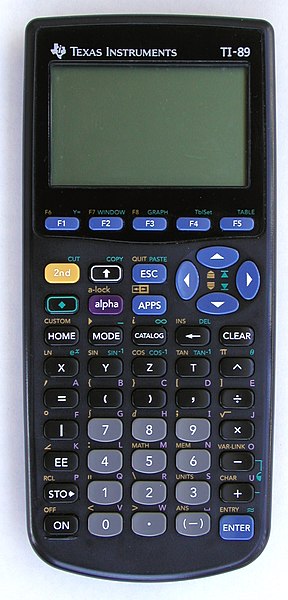
Although education is held in high regard by every Asian, there is a special place in the heart of Asians for arithmetic. Being Asian can mean a lot of things and encompasses people from many geographical and cultural backgrounds but undoubtedly being Asian means liking and appreciating math. The harder the math, the more likable it gets. From abacuses to TI-89 graphing calculators, from SOACAHTOA to limits, math is the glue that bonds countless Asians together. Just think, how many Asian students have you ever seen not have at least a TI-83 calculator if not the TI-89 plus; Asians are even less likely to have the Casio version of a graphing calculator. When it comes to math, Asians mean business. In fact it has been scientifically proven that there is a positive correlation between being an Asian mother and liking math. The higher you register on the Asian mother scale the more likely you’re going to are going to appreciate imaginary numbers.

Nobody loves math more than the vanguard of Asian familie

s, first generation Asian mothers. They may have no idea what their children are reading in school, but they know that if your homework assignment has numbers on it, it is of utmost importance. Ernest Hemmingway and Maya Angelou play second fiddle to Pythagoras in the Asian mother hierarchy of important people. In fact they like numbers so much, they cannot even fathom the letter grading system. In the perfect Asian world, grades would extend out to three decimal places if not more. A D- in phys ed? No big deal in the Asian household. An A- in math? Three cane lashings and being locked in a room with a graphing calculator, flash cards, and an abacus for the next few days.


Asian appreciation and general success at the four letter dread, math, has been attributed to many things from genetics, parenting, intense peer pressure, to being beat if they suck at math. The details and scientific research of this Asian phenomenon has spanned many research projects and grad school write ups and is best left to those who are much smarter than I am. I just know that math and Asians are tied at the hip. If you're Asian you either take pride in being good at math and Asian or take pride in the fact that you're Asian and not good at math; either way as an Asian you are measuring your Asian with your ability to perform derivatives.
The Immigration Act of 1965 or the Hart-Cellar Act greatly redefined the way immigrants came into the United States by expanding the number of people who could arrive on American soil from the eastern hemisphere. It was a landmark piece of legislation for many reasons but it is mainly known as the infamous day in history when grading curves in math classes were severely affected for non Asians for the rest of eternity. This day marked the day Ivy league schools and advanced placement high schools around the nation had to install English as a second language centers and classes up next to their engineering departments and calculus classrooms. A watershed moment in Asian American history indeed.

In short, we're Asian. We like numbers better than letters, unless those letters are being used to represent numbers.

Read more...

Sunday, July 5, 2009

Stuff We Rike #8 Repetitive Activities


Throughout the course of time, Asians have developed a reputation for excellence in certain endeavors and have even been coined, "model minorities," earning their white stamps of approval. If you were to explore the activities that Asians excel at in greater detail you will soon come to realize that these activities all have one thing in common, they require an immense amount of repetition. In fact Asians love repeating things. There is a magnetic pull that draws Asians to things that require countless hours of tedious repetition. We are serious believers in if you ever fail, try, try again until you succeed; otherwise you are just an Asian failure.

There is an unfair assumption that claims that Asians are really bland. I have to wholeheartedly disagree with that notion. Asians just really like to do stuff over and over and over again. They choose to engage in activities that can be mastered through the rinse and repeat method and will practice this activity until they reach a level of accomplishment they deem to be sufficient; which for most Asians means better than most people. Before Malcolm Gladwell popularized the 10,000 hour rule, in his book "Outliers," which states that : in order to become an expert in your field you must practice that activity for a minimum of 10,000 hours, Asians had another term for the rule; having Asian parents.

The variety of activities that Asians choose to practice over and over again cover a huge gamut of disciplines including athletics, music, academics and video games just to name a few. When choosing which activities to partake in, Asians traditionally steer themselves and their children towards activities that require the greatest amounts of focused repetition and the least amount of free thinking improvisation and creativity. The 456,237 to 1 Asian piano player to Asian saxophonist ratio clearly highlights the Asian desire to practice repetition over improvisation.

Even when you venture into the world of sports and the vast number of sports available for people to participate in you can see the concentration of Asian athletes are clustered towards sports that indeed require tons of repetition. Asians do not excel at sports such as basketball and soccer that require plenty of improvisation and on the fly decision making. Instead Asians are masters of synchronized diving, ping-pong, gymnastics and figure skating. I mean did you not see the introduction to the Beijing Olympics? Try getting that many people who are not Asian to do the same thing for three hours. Asians do not like to leave things to chance, when they can instead practice the tiniest of details over and over again and excel. The more variables involved in a sport, the less likely an Asian will participate. Think about it, that's probably why you've never seen an Asian freestyle wrestler. There are way too many possible holds, submissions and angles in freestyle wrestling. That's why Asians have sumo wrestling where you just push the other dude out of a circle over and over again.

Do not get me wrong though. Although Asians choose to choose simple repetitive sports to participate in, Asians are not only drawn to simple activities. This is simply not true. In fact Asians take even GREATER pride in mastering complex repetitive activities. Why do you think that Asians love to be good at math, Dance Dance Revolution and World of Warcraft? Do not be fooled. Asians are not inherently good at any of those previous three things. They just practice these activities with such zeal and secretiveness that it creates the illusion of being a character trait of Asians. Asians aren't better than anybody else at math or rhythmic dancing games, they are just better at repeating things and staying the course until they get it. So when the Asian kid who's been using his abacus since age two is better at the multiplication table than you or when the Asian gamer gets his World of Warcraft character to level 60 before you do, just know that it's not your fault, Asians are really good at repeating things.

Asians don't believe in practice make perfect. There would be nothing left to practice if perfect were ever reached. They do believe in practice makes you better than other people and to most Asians, that's all that matters.

Read more...

Wednesday, May 27, 2009

ObserAsian #4 Asians and Hair


Asians are known for a variety of physical traits from their flatter broader noses, shorter stature to this blog's inspiration, their eyes. One of the physical traits of Asians that is far less discussed is Asian hair. Asians have a very weird relationship with hair. Asian women are oft cited for having beautiful straight shiny and voluminous hair while Asian men are known for having thin hair wherever their genetics allow them to grow it. In short, Asians and specifically Asian men, really value their hair.

In fact you may have noticed the lack of arm and leg hair present on Asian men. Asian men throughout the years have devised two ways to cope with their lack of active hair follicles on their limbs. Asian men either embrace their lack of hair and cut their hair short to round out their look. We'll call this the minimalist approach. This is the approach that I take. For every bystander who asks us if we shave our legs or our arms we can just say, "well I don't have that much hair anyways," have them look at our shaved heads and nod in mutual understanding.

The other coping mechanism revolves around the overvaluation of hair and the we'll take it where we can get it approach. Asians value their hair and the ability to grow it immensely and have developed quite a culture surrounding hair. The placing of hair on the aesthetic pedestal leads to a variety of hairstyles that are unique to Asians. We will analyze these slightly more in depth.

1) The Dragonball Z Super Saiyan look. This is the simplest of excessive Asian hair growth. Modelling their hair after the popular animated anime series, the Dragonball Z look places emphasis on industrial strength hair gel, hair spray and jagged hair spikes. The fact that Asians equate long spiky hair with the ability to fly and shoot fireballs out of their hands just shows how much Asians truly value their hair. In fact just like the Dragonball Z series and the various levels of Super Saiyan, there are also levels of Asian Dragonball Z hairstyles.

Level 1 (Categorized by lack of hair products and emphasis on big vertical hair):
Level 2 (Categorized by use of hair products and the beginning formation of spikes):
Level 3 (Categorized by the use of hair products and hair dye. Also notice the increased jaggedness of the hair and anime qualities of the individual):
2) The well at least I can grow facial hair look. Asians are completely foreign to the five o'clock shadow. For Asian men, it might as well be the five day hiatus where hair does not even peer through their pores. Days and weeks can easily pass without the use of a razor. In fact the Gilette Mach 5 razor with its 5 blades would probably have enough blades per Asian facial hair. The Asian male who is able to truly grow facial hair is rare and probably Mongolian. There is a very slippery slope with Asians who are capable of growing facial hair; they either look like wise philosophers or creepy Asian men. There is no middle ground; you're either one or the other. Long Asian beards don the likes of renowned thinkers such as Confucius and Sun Tzu. Asian mustaches don the likes of these dudes:

Once again let's review. Asian beard = famed philosopher. Asian mustache = dirtiness.

3) The I know it looks stupid, but it's for good luck hair look. Asians know they cannot keep up with their American and Eastern European counterpart when it comes to growing hair. Asians instead choose to one up their counterparts by growing long strands of lucky hair, whether it be nose hair, ear hair, or the infamous mole hair. Since hair is so highly valued in Asian male society, the fact that hair can grow in such a concentrated area must mean that it is special and bestows good luck upon the hair bearer. When confronted about the sheer ridiculousness of this hair, the response is almost always, "well it's lucky."

4) The I know the only cool person to ever have this haircut in the history of mankind is Bruce Lee but I'm going to try it anyway bowl cut look. It is irrefutable that Bruce Lee is the man. His sheer awesomeness allowed him to overcome the indefensible Asian bowl cut. If you are not Bruce Lee, you should not have this hair cut. It is that simple. Even with the simplicity of this rule, Asians value having hair so much that they bite the bullet, and often. At one point in every Asian male's life they have had the Asian bowl cut.

Shout out to Beth for the inspiration.

Read more...

Wednesday, May 13, 2009

Stuff We Rike #7 Collecting Things

After scouring the aisles of our local grocery store and waiting in the check out line, the grocery bagger usually asks whether we prefer paper or plastic. With the increasing attention being paid to the environment the answer has increasingly become paper. This however is not the case for Asians. The green movement be damned, Asians always want plastic bags, and maybe even extra ones because us Asians, we just like to collect things too much.
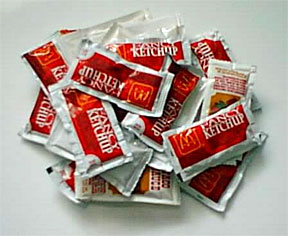
Everybody likes a bargain and everybody loves free giveaways but Asians have a propensity to value free at an unmatched level. Trips to fast food restaurants are actually thinly veiled excuses for Asians to hoard ketchup packets, salt and pepper packets, napkins, and plastic silverware for absolutely no reason but to have them at our disposal. Asians are genetically predispositioned to grab every individually wrapped knife and fork set even though they prefer to eat with chopsticks. Rarely are these gathered materials ever put into use as their utility is solely gathered from their acquisition and not their usage. In fact most Asians have a drawer, closet, or shelf for these collected objects to rest at. Knowing that they have a stash of condiments, disposable eating utensils and plastic bags in a safe and secure place in the back of our minds gives Asians a unique pleasure that is all our own. It would be one thing if these stashed items were put into use; well they are never used. You know how dogs bury random objects in the backyard with no intention of ever digging them back up in the future? Well that's how Asians are like with ketchup packets.

In fact the Asian love of scouring fast food joints for excess condiments is probably the sole reason why fast food chains now charge extra for barbecue sauce, sweet and sour sauce, or any other dipping sauces. Actually now that I think about it, Asians are probably the reason why McDonalds moved away from the easy access napkin dispensers to the vertical stack napkin dispensers that force you to take one napkin at a time. These are just a few steps the fast food industry have taken to Asian proof their restaurants.
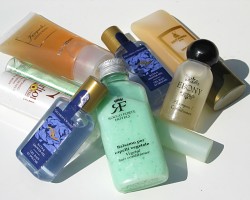
The fast food industry is not the only industry that has been severely affected by the Asian predisposition to collect small free objects. The hospitality industry and the hotels of the world have had their coffers raided for their miniature shampoo, conditioner, and cheap bar soap for years now. In fact most Asians will take a shower with their own shampoo and conditioner just so that they can take home the 2oz bottles of shampoo home for future non usage. The more brazen of the Asian contingent will even progress to hoarding shower caps, cheap three inch long toothbrushes, and disposable sewing kits despite having a near zero chance of ever using these items in the near or distant future.

Now some of you may be thinking to yourselves that this phenomenon is solely represented by the Asian mother cohort and you are only partially correct. Younger Asians are also trained to collect things from a young age in order to carry on the Asian tradition of hoarding unnecessary goods. A prime example of this is Pokemon whose slogan is "Gotta Catchem All!" Why do you think that Asians were so drawn to Pokemon? It's because they love to collect things; even if they are fictional yellow rats that have the ability to shoot electricity out of its cheeks. While others try to get through the game, Asians want to not only get through the game, they indeed want to catch them all.
I have to admit. I did collect them all when I was a kid. I even had to trade between the red and the blue cartridge to get them them all. I do not know whether or not to be proud of myself.

Read more...

Thursday, May 7, 2009

Stuff We Rike #6 Photography


There are certain moments in life, places in the world or people in our mist that we want to not only ingrain into our memories but to commemorate with a timeless photograph or at least save a digital copy of on our computer hard drives; moments such as college graduation, places such as the Eiffel Tower, or Lindsay Lohan sightings at the chic new restaurant in downtown L.A. that just scream, "Take A Picture! Actually Take Two!" Then there are Asian tourists who believe that there is no moment, no place or no person that does not deserve to be photographed and photographed often. There is a famous saying that goes, "A picture is worth a thousand words." If that is indeed true, then Asians have provided tomes upon tomes worth of literature to the world. In short, Asians really like to take photographs.

At one point or another there has been a time in our lives where we have overinflated the value of a certain time, place or person we were with and took a few too many pictures of an event. We get swept up in the moment, and let our photo taking finger get a little button happy and we end up having 19 photos of the Statue of Liberty from 19 different angles or we take 19 group photos because Mandy can't quite keep her eyes from blinking. Asians however, know no bounds. There are never too many angles, never too many retakes and never a photograph that should not be taken and retaken. Asians are not too shy to arch their backs, crane their necks, or utilize advanced tai chi moves in order to capture the quote unquote moment in film as exampled by this lady.

The most egregious example of the Asian love of photography has to be location based photographs. The world is a splendid place with many remarkable locations that are more than worthy of being photographed. The vastness of the Grand Canyon, the majesty of the Empire State Building, the shear power of the crashing waves at Niagara Falls, the mysteriousness of Stone Henge among a slew of other noteworthy sites all merit the proverbial "Kodak Moment" tag. Asians must have a heightened sense respect for these vaunted sites because not only do they take pictures of the sites themselves, they take pictures with the stop signs, mailboxes, fast food joints, rocks, and other objects that loiter the main attraction site as well. You know what I am talking about. Asians are infamous for taking picture of the completely unspectacular, unremarkable and completely obscure; so much so that casual tourists think to themselves, "If so many Asians are taking pictures of the rock by the Eiffel tower, it must be a famous rock. Maybe a revolutionary died on the rock?"

Let's look at this picture for example. There are four people taking pictures in this picture, all who happen to be Asian. Two of the four are taking pictures of Asians taking pictures. This is a vicious cycle indeed. Also take note of the number of checklist requirements that are present in this picture.

You may be thinking that tourists come from all different backgrounds and that Asians are not the only ones who are guilty of overindulging in photo taking. You are right. The problem is that not every group of photographers stand out as much as Asian photographers In fact here is a quick checklist to help you spot Asian Photography Zealots.

1) They are Asian
2) They have a knapsack with various camera accessories
3) They have a camera that does not fit into the pocket of a pair of jeans and are using the camera neck strap
4) They may or may not have a tripod with them
5) They may or may not have multiple cameras with them
6) They are taking pictures of stuff that nobody else is photographing
7) They are taking a photo in a position other than standing
8) They are traveling in a huge pack
9) Each member of the group has their own camera.
10) Each member of the group wants their own version of the same picture.
11) They are oblivious to other people around them because they are so hellbent on taking the perfect picture
12) They really seem to like peace.

I am going to elaborate on point number 12 on the checklist because of its great importance in the execution of Asian photography. In fact the Asian V Sign or the peace sign goes hand in hand with Asian photography as peanut butter does to jelly. The V Sign is the major byproduct of the Asian love of taking pictures. As much as Asians love taking pictures, they love to seemingly promote world peace in their pictures as well. Following in the footsteps of other famous photograph hand ornaments as the Star Trek Vulcan sign, gang symbols, sorority hand logos, and the shocker, Asians have made the Asian V their own.

While the true popularization and origins of the Asian V are constantly debated, what is known is the fact that nary an Asian group photo is taken without the presence of the Asian V. There is a distinct difference between the Asian V and the universal symbol for peace. Although they both generally take the same shape and form, the Asian V is almost exclusively held up by the face region and slightly angled either towards or away from an ear to ear teeth bearing smile. In the following two examples take note of the angular nature of the Asian V and the utilization of both hands.

Here is an example of an Inward Asian V:

Here is an example of an Outward Asian V:

Both the Inward and Outward Asian V sign are fully acceptable in the grand scheme of Asian photography. Both can also be modified from the preferred two hand version to the less widely adopted one handed versions of the Inward and Outward Asian V sign. Like most everything else, leave it to the second and third generation Asians to bastardize the sacred Asian V with their one handed versions. We just don't do things as well as we used to.

As mentioned earlier the peace sign is not the same thing as the Asian V. For example this is a peace symbol. The first sign that this is probably not an Asian V sign is the fact that he is not Asian. A more subtle sign that this is not an Asian V is the one handed nature of the pose. The telltale sign that this is not an Asian V sign but rather a conventional peace sign is the complete uprightedness of his peace sign. The positioning of his peace sign and how it is completely parallel with his head is also worthy of note.

Smile!  You're probably in the background of an Asian photo as we speak.  

Read more...