WELCOME!

Welcome to Through the Slant a blog offering perspective of the world from the the eyes of an aspiring pseudo sociologist who often believes that he is either too Asian or not Asian enough. If you enjoy my blog, become a follower don't be shy.

Friday, July 24, 2009

ObserAsian #5 Eye Envy


For better or worse, she wants bigger eyes. Most Asians inherently do for no good reason whatsoever and have quite the case of eye envy.

What do Pikachu, Sailor Moon, Hello Kitty and the cast of characters from Final Fantasy all have in common with one another? Well aside from being the subject of young Asian fantasies, they all share one connecting bond; they all have abnormally over sized eyes. Much like height challenged males who drive Ford F-350 pickup trucks or the ego challenged driving Porsche, Asians are constantly made aware of their ocular shortcomings and choose to overcompensate by endowing their creative forays with disproportionately large eyes.

Asians are obsessed with many things but among the most touchy subject for Asians are their eyes. Asides from you know, the color of their skin, the one physical attribute that most easily identifies Asians are their distinct eyes. Through the vigors of childhood nursery rhyme clapping games, even young children are crudely adept at determining who is either Chinese, Japanese or an Indian Chief. Since there is no Asian equivalent to "sticks and stones my break your bones, but words may never hurt you," Asians have taken these eye taunts to heart and have grown increasingly self conscious of their eyes.

Many Asians lack a "double fold" in their eyelids which creates the slant like appearance of Asian eyes that have become commonplace in the caricatures of Asians and the mockery of Asians by Disney youth celebrities (That would be you Miley Cyrus). It is this lack of a double fold that creates the illusion that Asians have smaller eyes than others and more importantly gives my blog its title. Asians, and especially Asian women, have allowed this eye obsession to create mass insecurities and have led many Asians to take upon many options to try and increase the size of their eyes or accentuate what eye shape they already have.

Much like the western beauty standard that Asians want to adapt, Asians have also adopted the western way of achieving this standard; surgery! Asian women often travel outside the country to receive fat injections in their eyelids to create the ever elusive double eye fold. The other oft used method for eye accentuation is the much less drastic but equally excessive technique of creating the much coveted "smoky Asian eye look." The theory behind the smoky eye is very similar to the vertical or horizontal stripe theory which tells fat people to wear vertical stripes to bring out their height. The smoky eye theory basically means to surround your eye with as much dark make up as possible so that it looks like your eye whites are taking up a lot more space than they actually are. As a side benefit, the smoky eye makeup also allows Asian women to look extra exotic for good measure.

You may think that the Asian envy of the western standard of eye beauty may be a bit overdone, and in that regard, you are indeed correct. What compounds the perplexity of this entire scenario is how Asians choose to tackle this self esteem issue. Even though Asians make up a third of the world, they still choose to use western beauty standards for their women and their children. Why else would their children be idolizing their Anime comic book heroes with their over sized glassy blue eyes? Even their yellow rats that can shoot lightning out of their rosy red cheeks have these mega sized eyes. So for every young American girl who plays with their Barbie doll who might one day get a boob job, every Asian girl playing with her Sailor Moon doll may one day get a double eye lift surgery while wearing a school girl uniform.

Peek a Boo.

Read more...

Saturday, July 11, 2009

Stuff We Rike #9 Math


Yes, it's true, Asians really like math.

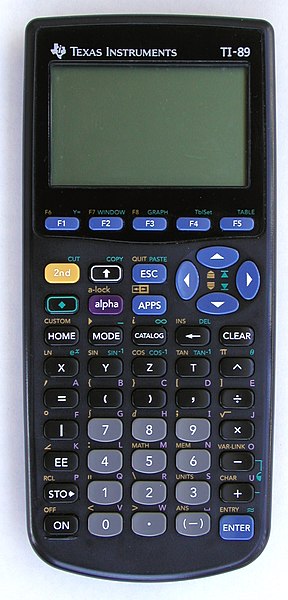
Although education is held in high regard by every Asian, there is a special place in the heart of Asians for arithmetic. Being Asian can mean a lot of things and encompasses people from many geographical and cultural backgrounds but undoubtedly being Asian means liking and appreciating math. The harder the math, the more likable it gets. From abacuses to TI-89 graphing calculators, from SOACAHTOA to limits, math is the glue that bonds countless Asians together. Just think, how many Asian students have you ever seen not have at least a TI-83 calculator if not the TI-89 plus; Asians are even less likely to have the Casio version of a graphing calculator. When it comes to math, Asians mean business. In fact it has been scientifically proven that there is a positive correlation between being an Asian mother and liking math. The higher you register on the Asian mother scale the more likely you’re going to are going to appreciate imaginary numbers.

Nobody loves math more than the vanguard of Asian familie

s, first generation Asian mothers. They may have no idea what their children are reading in school, but they know that if your homework assignment has numbers on it, it is of utmost importance. Ernest Hemmingway and Maya Angelou play second fiddle to Pythagoras in the Asian mother hierarchy of important people. In fact they like numbers so much, they cannot even fathom the letter grading system. In the perfect Asian world, grades would extend out to three decimal places if not more. A D- in phys ed? No big deal in the Asian household. An A- in math? Three cane lashings and being locked in a room with a graphing calculator, flash cards, and an abacus for the next few days.


Asian appreciation and general success at the four letter dread, math, has been attributed to many things from genetics, parenting, intense peer pressure, to being beat if they suck at math. The details and scientific research of this Asian phenomenon has spanned many research projects and grad school write ups and is best left to those who are much smarter than I am. I just know that math and Asians are tied at the hip. If you're Asian you either take pride in being good at math and Asian or take pride in the fact that you're Asian and not good at math; either way as an Asian you are measuring your Asian with your ability to perform derivatives.

The Immigration Act of 1965 or the Hart-Cellar Act greatly redefined the way immigrants came into the United States by expanding the number of people who could arrive on American soil from the eastern hemisphere. It was a landmark piece of legislation for many reasons but it is mainly known as the infamous day in history when grading curves in math classes were severely affected for non Asians for the rest of eternity. This day marked the day Ivy league schools and advanced placement high schools around the nation had to install English as a second language centers and classes up next to their engineering departments and calculus classrooms. A watershed moment in Asian American history indeed.

In short, we're Asian. We like numbers better than letters, unless those letters are being used to represent numbers.

Read more...

Sunday, July 5, 2009

Stuff We Rike #8 Repetitive Activities


Throughout the course of time, Asians have developed a reputation for excellence in certain endeavors and have even been coined, "model minorities," earning their white stamps of approval. If you were to explore the activities that Asians excel at in greater detail you will soon come to realize that these activities all have one thing in common, they require an immense amount of repetition. In fact Asians love repeating things. There is a magnetic pull that draws Asians to things that require countless hours of tedious repetition. We are serious believers in if you ever fail, try, try again until you succeed; otherwise you are just an Asian failure.

There is an unfair assumption that claims that Asians are really bland. I have to wholeheartedly disagree with that notion. Asians just really like to do stuff over and over and over again. They choose to engage in activities that can be mastered through the rinse and repeat method and will practice this activity until they reach a level of accomplishment they deem to be sufficient; which for most Asians means better than most people. Before Malcolm Gladwell popularized the 10,000 hour rule, in his book "Outliers," which states that : in order to become an expert in your field you must practice that activity for a minimum of 10,000 hours, Asians had another term for the rule; having Asian parents.

The variety of activities that Asians choose to practice over and over again cover a huge gamut of disciplines including athletics, music, academics and video games just to name a few. When choosing which activities to partake in, Asians traditionally steer themselves and their children towards activities that require the greatest amounts of focused repetition and the least amount of free thinking improvisation and creativity. The 456,237 to 1 Asian piano player to Asian saxophonist ratio clearly highlights the Asian desire to practice repetition over improvisation.

Even when you venture into the world of sports and the vast number of sports available for people to participate in you can see the concentration of Asian athletes are clustered towards sports that indeed require tons of repetition. Asians do not excel at sports such as basketball and soccer that require plenty of improvisation and on the fly decision making. Instead Asians are masters of synchronized diving, ping-pong, gymnastics and figure skating. I mean did you not see the introduction to the Beijing Olympics? Try getting that many people who are not Asian to do the same thing for three hours. Asians do not like to leave things to chance, when they can instead practice the tiniest of details over and over again and excel. The more variables involved in a sport, the less likely an Asian will participate. Think about it, that's probably why you've never seen an Asian freestyle wrestler. There are way too many possible holds, submissions and angles in freestyle wrestling. That's why Asians have sumo wrestling where you just push the other dude out of a circle over and over again.

Do not get me wrong though. Although Asians choose to choose simple repetitive sports to participate in, Asians are not only drawn to simple activities. This is simply not true. In fact Asians take even GREATER pride in mastering complex repetitive activities. Why do you think that Asians love to be good at math, Dance Dance Revolution and World of Warcraft? Do not be fooled. Asians are not inherently good at any of those previous three things. They just practice these activities with such zeal and secretiveness that it creates the illusion of being a character trait of Asians. Asians aren't better than anybody else at math or rhythmic dancing games, they are just better at repeating things and staying the course until they get it. So when the Asian kid who's been using his abacus since age two is better at the multiplication table than you or when the Asian gamer gets his World of Warcraft character to level 60 before you do, just know that it's not your fault, Asians are really good at repeating things.

Asians don't believe in practice make perfect. There would be nothing left to practice if perfect were ever reached. They do believe in practice makes you better than other people and to most Asians, that's all that matters.

Read more...